
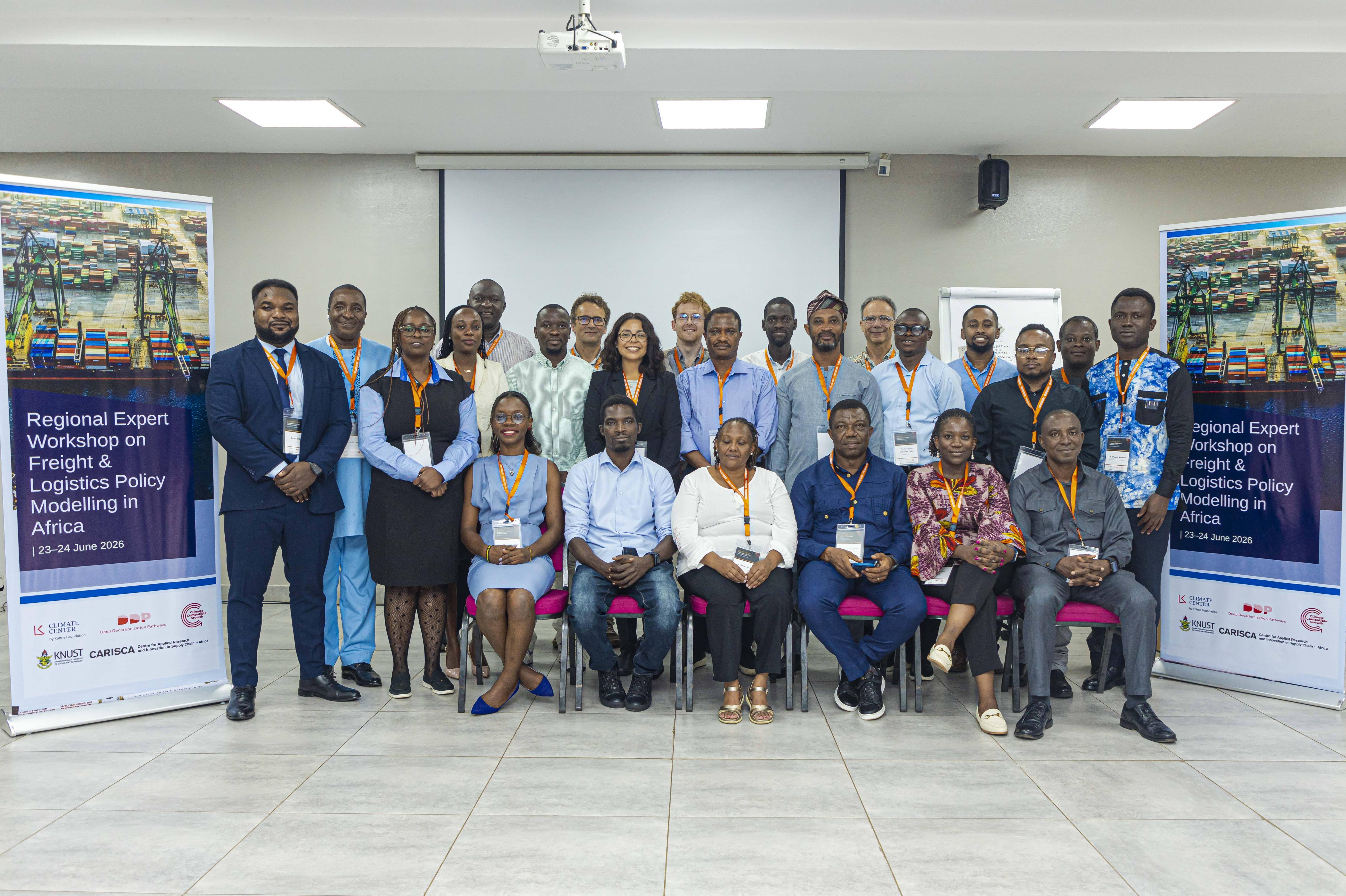
The Center for Applied Research and Innovation in Supply Chain Africa (CARISCA) at KNUST, in collaboration with the Kuehne Climate Center (KCC), Climate Compatible Growth (CCG) and Deep Decarbonization Pathways (DDP), an initiative of IDDRI – Institut du développement durable et des relations internationales, has organised a Regional Expert Workshop on Freight and Logistics Policy Modelling in Africa.
The workshop brought together experts from Africa, Europe and North America to advance sustainable freight systems and climate-compatible development.
The two-day workshop aims to strengthen regional cooperation and data-driven policy modelling for freight and logistics across Africa.
The gathering comes at a time when Africa's freight and logistics sector is facing increasing pressure from inefficiencies in cross-border transport, rising emissions and growing demand for faster and more reliable supply chains. By convening experts to develop shared analytical frameworks, the workshop seeks to align policy, investment and climate action in ways that support economic growth, regional integration and decarbonisation.
Speaking on why Ghana and KNUST were selected to host the workshop, Olivia Lamenya of KCC highlighted the depth of expertise already present on the continent and Ghana's strategic importance as a convening point.
“When you think about where a lot of the knowledge is, it's definitely here. It may not look as advanced, but it actually is here. Most of the modelling that we understand on the continent is in Ghana,” she said.
She further explained that accessibility and academic credibility influenced the decision.
“Ghana is the easiest to come to, and KNUST comes with a lot of history. So there was no question in our minds,” she added.
Lamenya said the workshop also seeks to correct geographic imbalances in continental discourse, noting that West Africa is often underrepresented in such technical discussions.
“Why not show people that the continent is not just half? There is another half of it that people are quietly doing things and nobody is aware of,” she said.
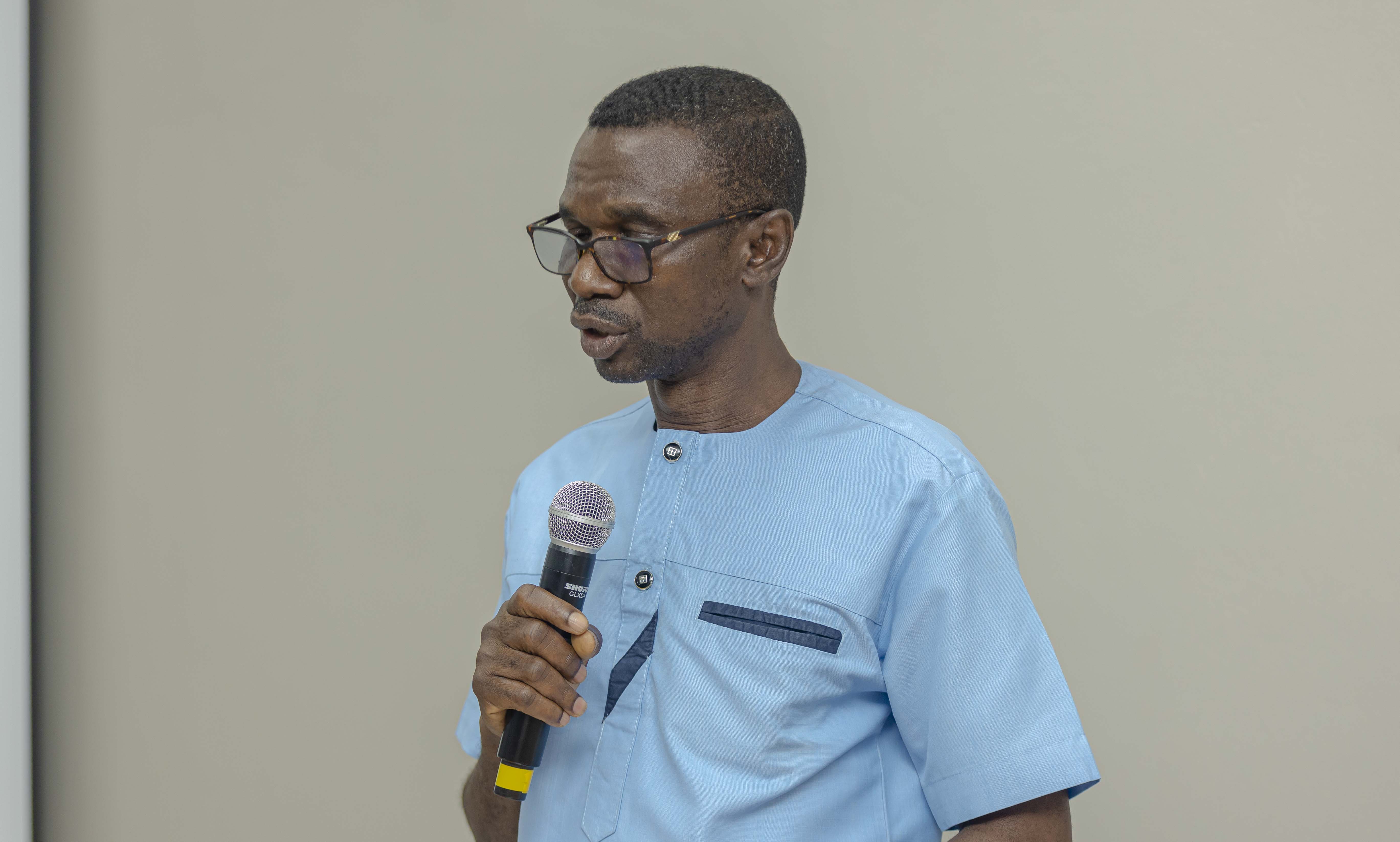
Professor Kabila Abass, Dean of the Faculty of Humanities, who represented the Provost of the College of Humanities, Professor Charles Marfo, underscored the significance of the workshop to Africa's development trajectory and KNUST's mission as a research-intensive institution.
He said the convergence of experts at KNUST reflected the urgency of addressing interconnected challenges in freight systems, sustainability and logistics efficiency.
“The fact that experts have converged here in Kumasi is a testament to the importance of this workshop and to the growing recognition that the challenges of freight systems, logistics efficiency, sustainable energy transitions and decarbonisation cannot be solved in isolation,” he said.
Professor Abass said the workshop aligned with the University's commitment to research that informs policy and drives innovation.
“At KNUST, we firmly believe that universities must serve not only as centres of teaching and learning but also as engines of knowledge creation and innovation that address society's most complex challenges,” he said.
He also noted CARISCA's role in advancing evidence-based solutions for supply chain systems.
Professor Abass further highlighted the significance of the workshop taking place during KNUST's 75th Anniversary celebrations, describing it as part of a broader series of engagements marking the milestone.
“We hope that when you depart, you will leave not only with new ideas, fruitful collaborations, and strengthened professional networks, but also with fond memories of KNUST, Kumasi and Ghana,” he added.
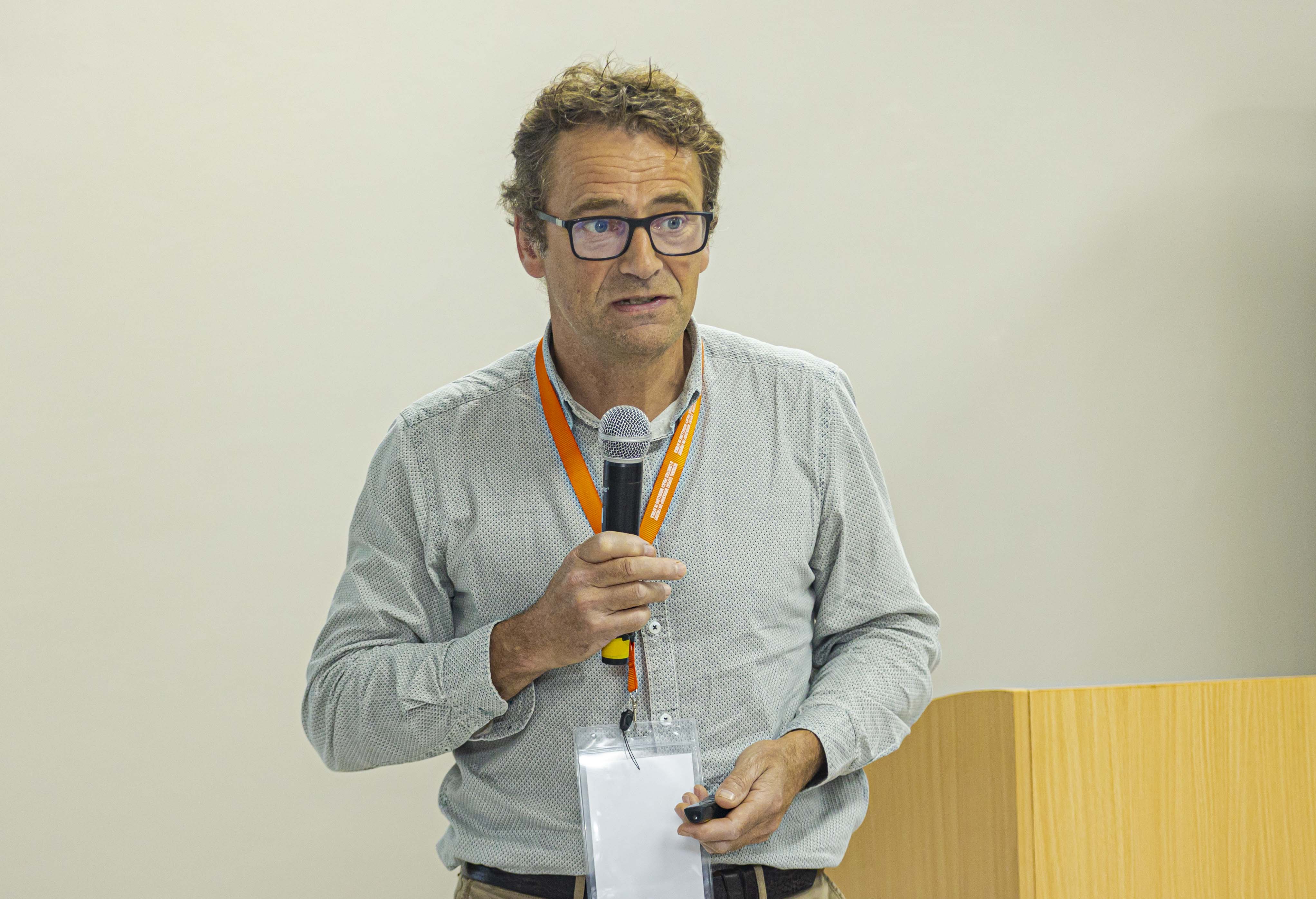
Nicolas Beaumont of IDDRI-DDP drew attention to the increasing demand for faster delivery systems and its implications for emissions and infrastructure.
He observed that modern consumption patterns, driven by expectations of rapid delivery, are reshaping logistics systems globally.
“People want a service that is always faster through Amazon you want your product for the next day,” he said, noting that increased speed in supply chains often translates into higher transport volumes, greater energy use and increased emissions.
Beaumont challenged participants to consider the long-term implications of consumption and production trends on freight systems.
“What are we going to produce? What are we going to consume? What are we going to transport 20 or 30 years from now?” he asked.
He said policy and modelling approaches must account for product diversity, distance and evolving economic structures rather than relying on aggregate assumptions.
He also raised critical questions around circular economy transitions, noting that while recycling and reuse may reduce consumption in some cases, they could also reshape freight demand and transport patterns.
Story: Eunice Odumaa Asare


